



State Property Translates Kebaya Craftsmanship Into Singapore Tennis Open Trophy

Published On 14 Aug 2026

State Property, the Singapore-founded fine jewellery brand whose creations have been worn by public figures such as Michelle Obama, Rihanna, and Taylor Swift, has long established itself for bringing exceptional craftsmanship to the global stage.
Now, the brand is bringing that same artistry to a distinctly Singaporean commission — designing the Singapore Tennis Open trophy.
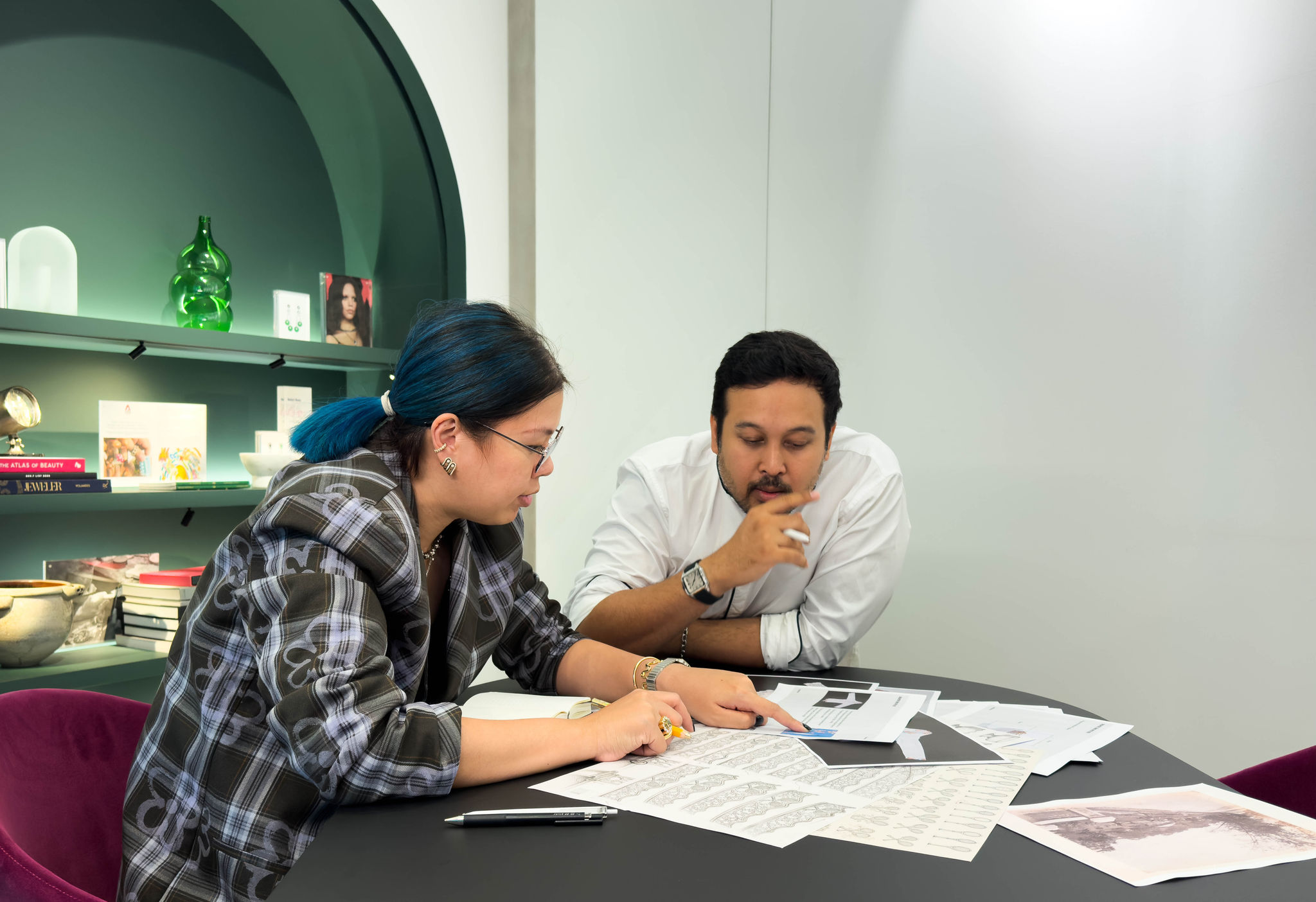
“This is the first trophy State Property has designed. We were excited, but also very aware of the responsibility. Unlike jewellery, which belongs to one wearer, a trophy comes to represent an entire tournament and a defining moment in an athlete’s career,” founders Lin Ruiyin and Afzal Imram said.

For co-founders Lin, an award-winning jeweller trained at Central Saint Martins in London, and Afzal, who studied Industrial Design at the National University of Singapore, the trophy represents more than just a departure from fine jewellery.
“We were drawn to the opportunity to apply our design language at a completely different scale. A trophy is both an object and a symbol. It gave us the chance to create something rooted in Singapore that would eventually be lifted on an international sporting stage.”
Tasked with crafting a distinctive trophy that felt connected to both Singapore and the tournament, the pair said, “We wanted it to feel contemporary and international, while carrying a story that could only have come from here.”
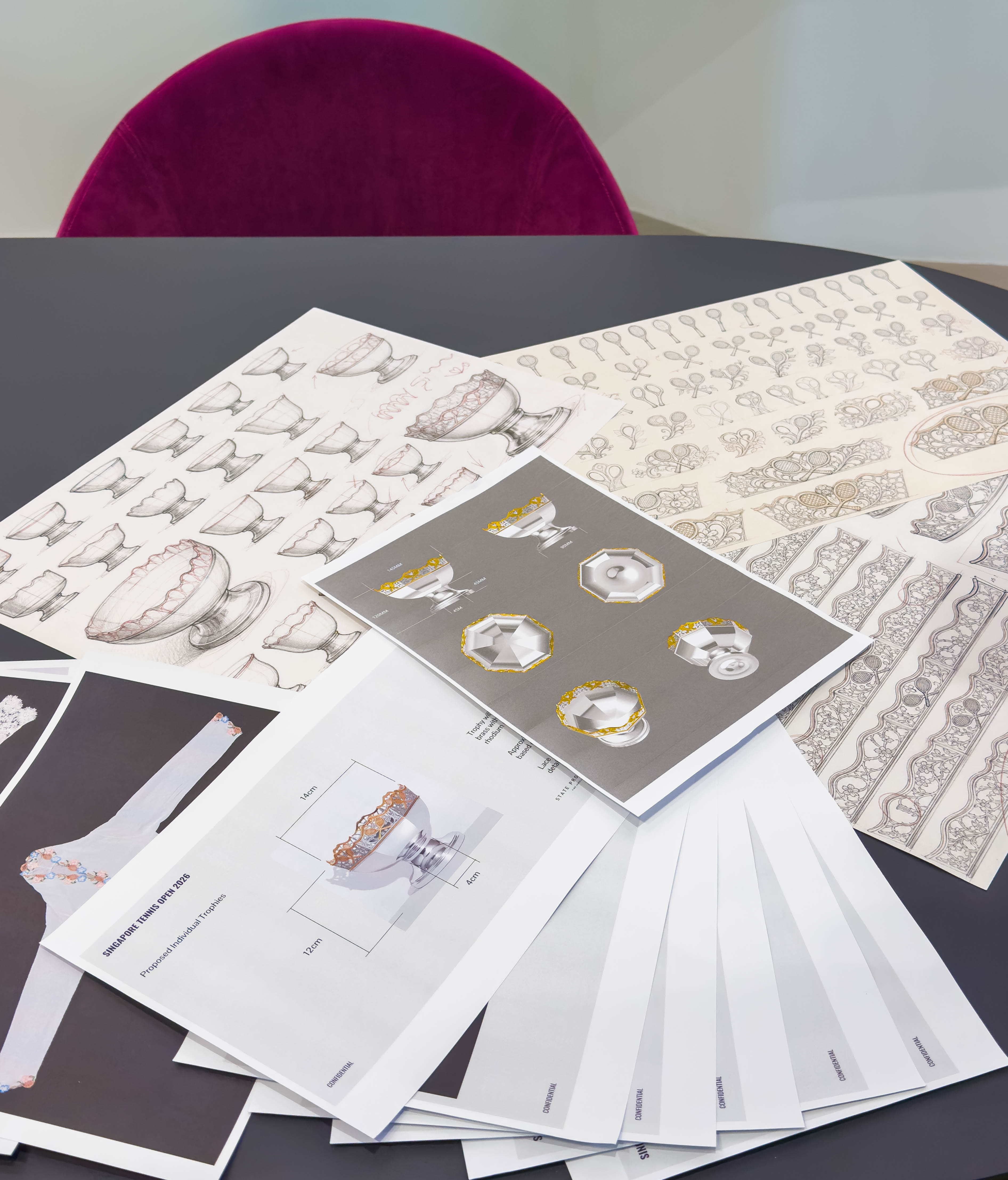
The design process began much as it does for the brand’s jewellery collections with extensive research, storytelling, careful consideration of proportion, and meticulous attention to detail.
The key difference, they explained, was one of scale and purpose.
"Jewellery needs to sit beautifully on the body, while a trophy needs to command presence from a distance, feel satisfying to hold, and remain visually strong from every angle."
In keeping with State Property's design philosophy of drawing inspiration from culture, literature and history, the trophy takes its cues from a 1930s kebaya found in Singapore's museum archives.
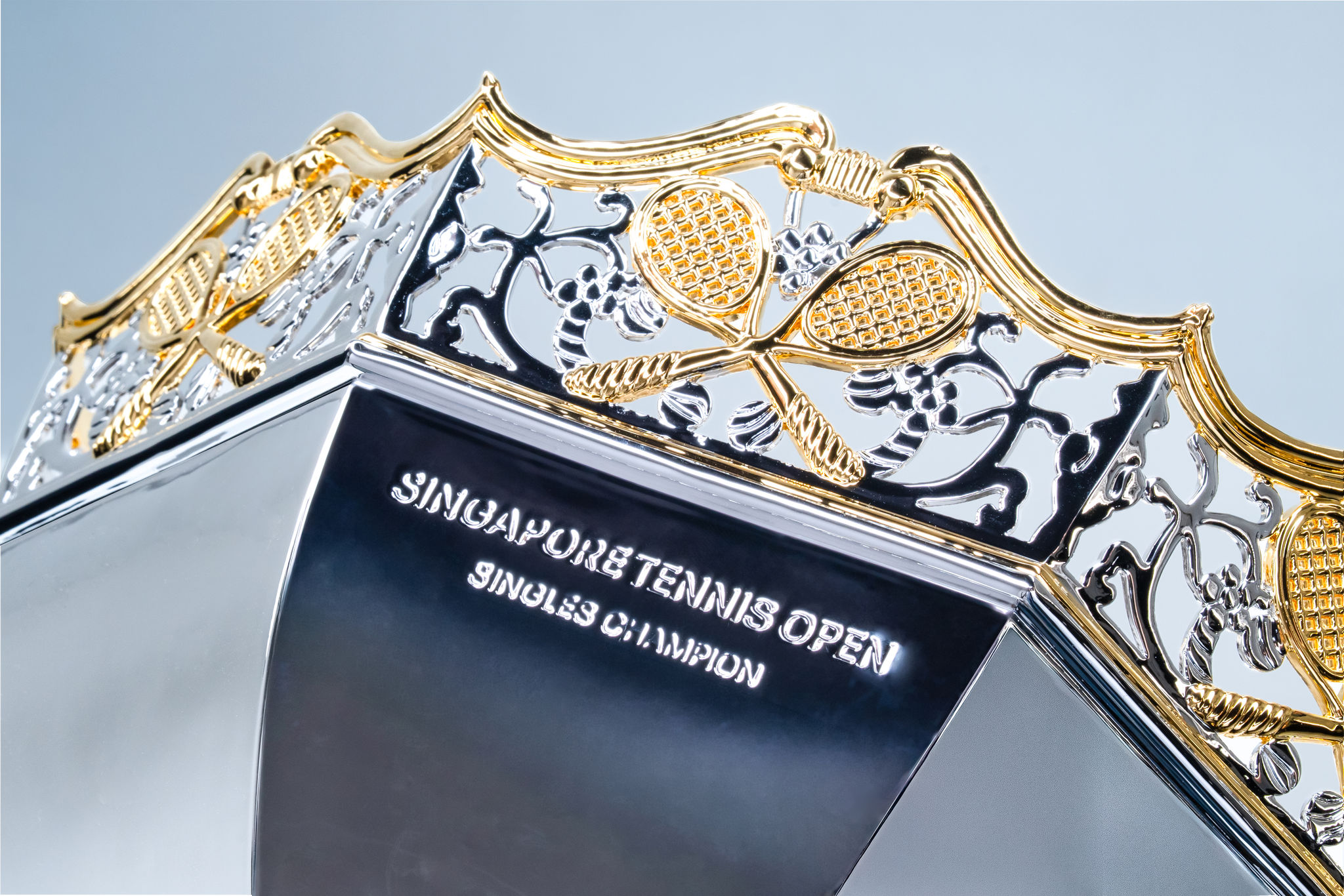
The kebaya’s delicate lace embroidery featured an unexpected detail, tennis racket motifs woven among traditional floral patterns, a serendipitous find that perfectly bridged Singapore's cultural heritage with the sport all those years ago.
“We began by researching Singaporean visual references and looking for a connection that felt meaningful rather than decorative.
“Once we found the kebaya, it became the anchor for the design. We studied its embroidery, simplified and reworked the motifs, developed the overall form through sketches and three-dimensional modelling, and then refined the construction with the fabricators until the details and proportions felt resolved.
“We translated that meeting of sport, craft and heritage into the trophy, allowing the rackets and botanical forms to interlock across its upper rim.
The project took nearly six months to complete, spanning every stage from research and concept development to sketching and refining the trophy's three-dimensional form.
This was followed by the final phases of prototyping, engineering, fabrication and intricate hand-finishing, with each step carefully considered to ensure the trophy was both visually striking and structurally sound.
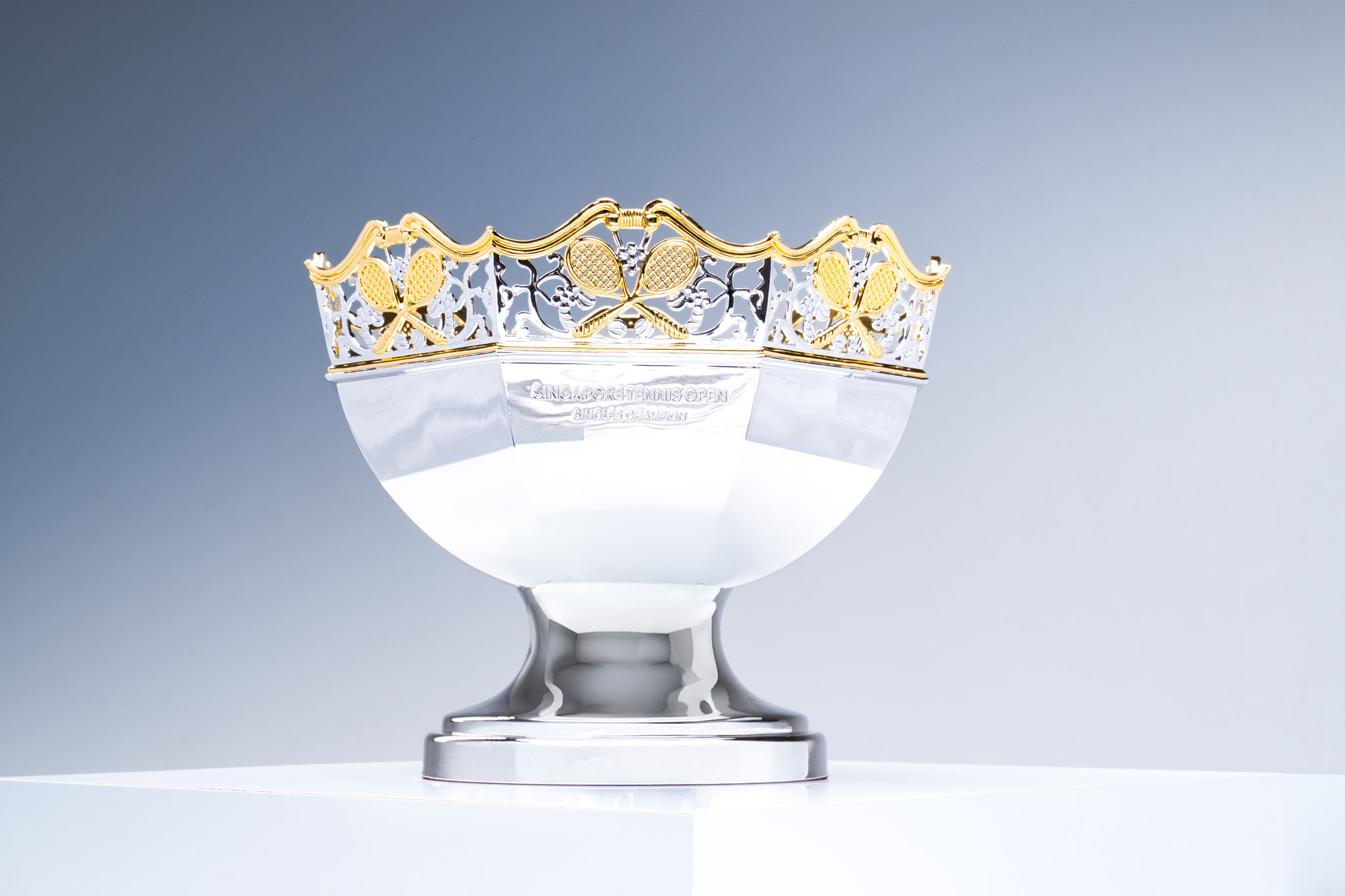
Standing approximately 22cm tall and measuring 26.5cm across, the trophy is crafted from brass with gold and rhodium plating.
“We selected (these materials) to give the trophy a sense of permanence, weight and ceremony, while allowing the intricate kebaya-inspired details to remain crisp and visible.”
Achieving that balance, however, was one of the project's greatest technical challenges.
"One challenge was translating something as delicate as lace embroidery into a structure that needed to be strong and three-dimensional. We had to preserve the lightness and intricacy of the original motif without making the trophy feel fragile. That required repeated adjustments to the pattern, thicknesses and points of connection."
Now complete, the finished product reflects the pair’s hope to create a trophy that unveils its story and meaning layer by layer.
"It has a story that reveals itself gradually. From a distance, it reads as a strong and celebratory sporting trophy. Up close, you discover the tennis rackets woven into a lace-like pattern inspired by a historic kebaya. That unexpected relationship between sport and heritage is what gives it its identity."
“We hope the winner feels that the trophy is equal to the moment. That it carries the weight of her achievement, the energy of the tournament, and a small piece of Singapore that will travel home with her,” they said.
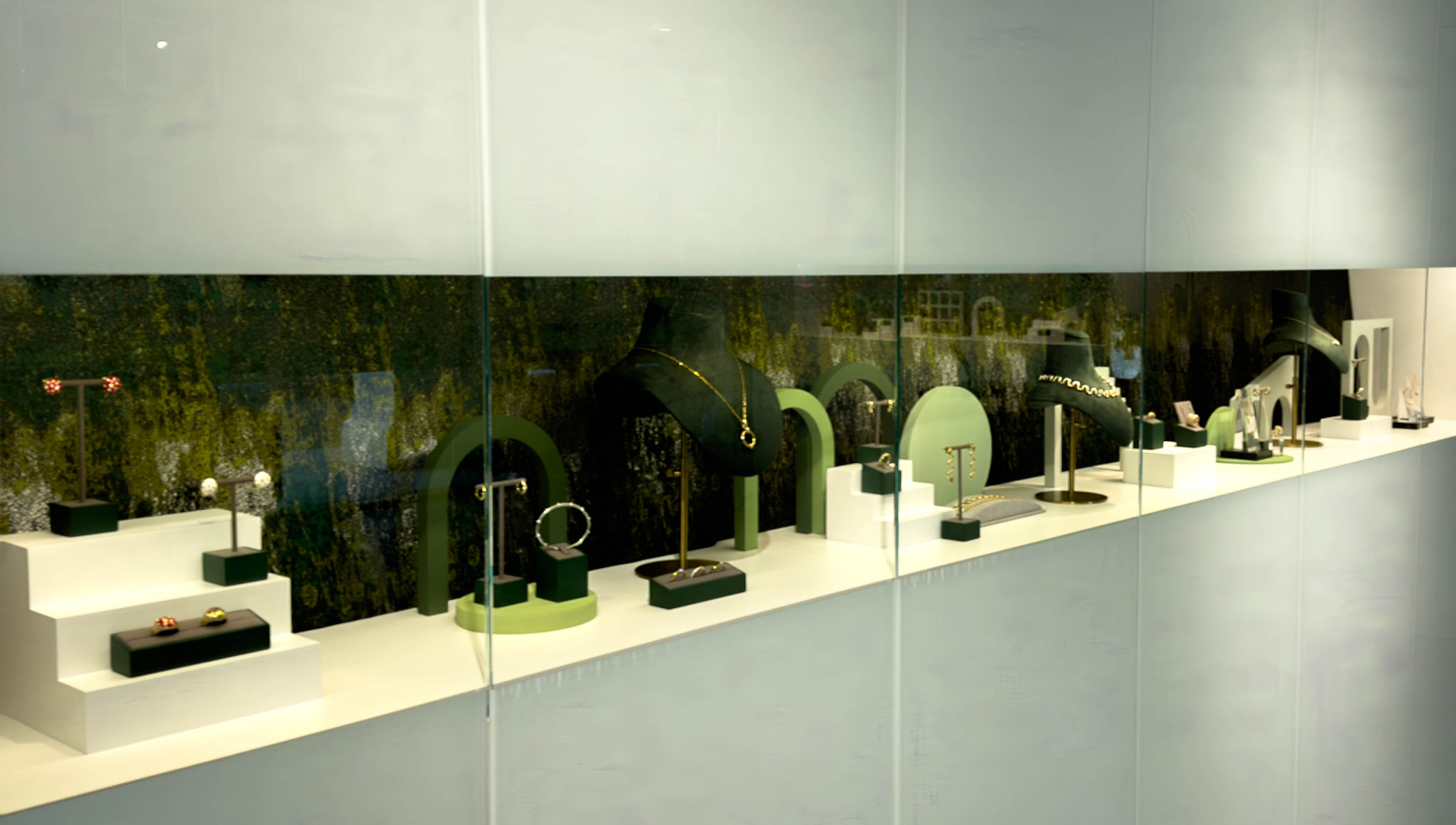
Accustomed to creating intricate pieces measured in millimetres , Lin and Afzal fully embraced the challenge of working on a much larger canvas through this unique project.
But, more significant than the scale, was the opportunity to create an object that would become part of Singapore's sporting history.
"It was deeply rewarding to see our ideas move beyond jewellery and into an object that will become part of the tournament's history. Jewellery often carries personal memories. A trophy carries a collective memory, shared by the athlete, the audience and the city hosting that moment. To contribute to that is very meaningful to us."
In many ways, the Singapore Tennis Open trophy is a natural extension of State Property's design philosophy — bringing the same craftsmanship, storytelling and attention to detail found in its fine jewellery collections to one of the tournament's most enduring symbols. Discover more about State Property and its work here.
Stories, guides and community moments