



Serving Up a New Era: How the Singapore Tennis Open and The Kallang Are Sparking Southeast Asia’s Tennis Renaissance

Published On 06 Oct 2026

On a sunlit afternoon across the precinct of The Kallang this week, the sharp thwack of graphite striking felt cuts through an energetic hum of chatter, music, and laughter.
Inside the OCBC Arena at The Kallang, top-ranked women’s players trade furious, baseline groundstrokes at over 120 km/h; outside, across the sun-drenched concourses and breezeways of Arena Park and Kallang Wave Mall, children swing oversized racquets twice the size of their torsos while fans gather under parasols to watch live match feeds.
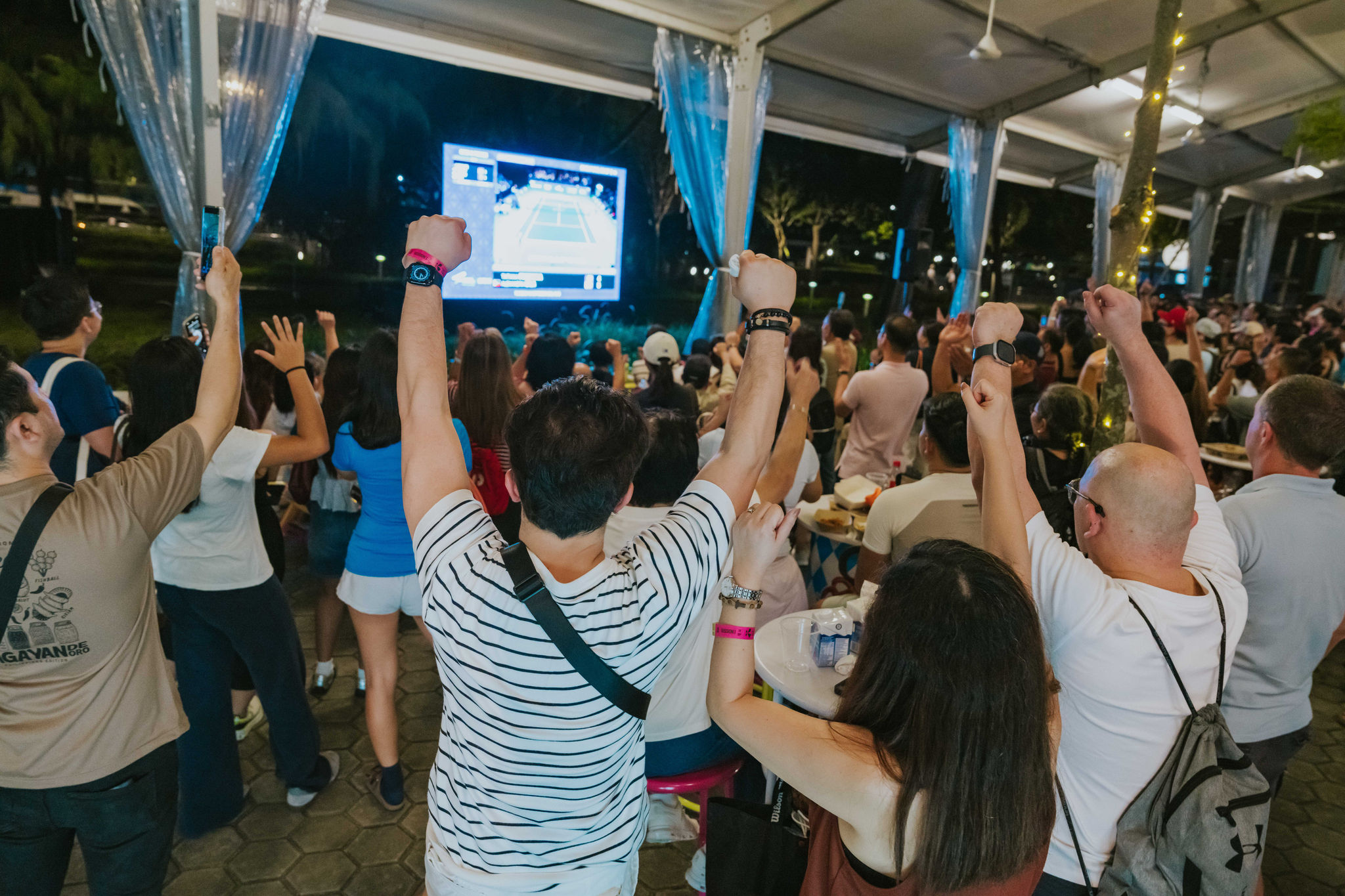 Break Point Garden comes alive as fans gather to watch the Singapore Tennis Open live on the big screen.
The Singapore Tennis Open has made its triumphant statement as Southeast Asia’s sole WTA 500 fixture. Yet, walking the grounds across an eight-hour festival day reveals that this tournament’s grandest triumph reaches well beyond ranking points or winner's cheques.
By weaving world-class elite athletics together with inclusive community activations, free public fan villages, and masterclasses from living legends, the Singapore Tennis Open presented by BNP Paribas has established The Kallang as a premier sporting destination on the world map — while igniting a long-term passion for tennis across an entire region.
Few understand the gravity of this tournament’s presence quite like tournament ambassadors Yayuk Basuki and Tamarine Tanasugarn. Both once conquered global draws to reach the prestigious World No. 19 mark — Basuki for Indonesia and Tanasugarn for Thailand — acting as solitary pioneers for Southeast Asian tennis throughout the 1990s and 2000s.
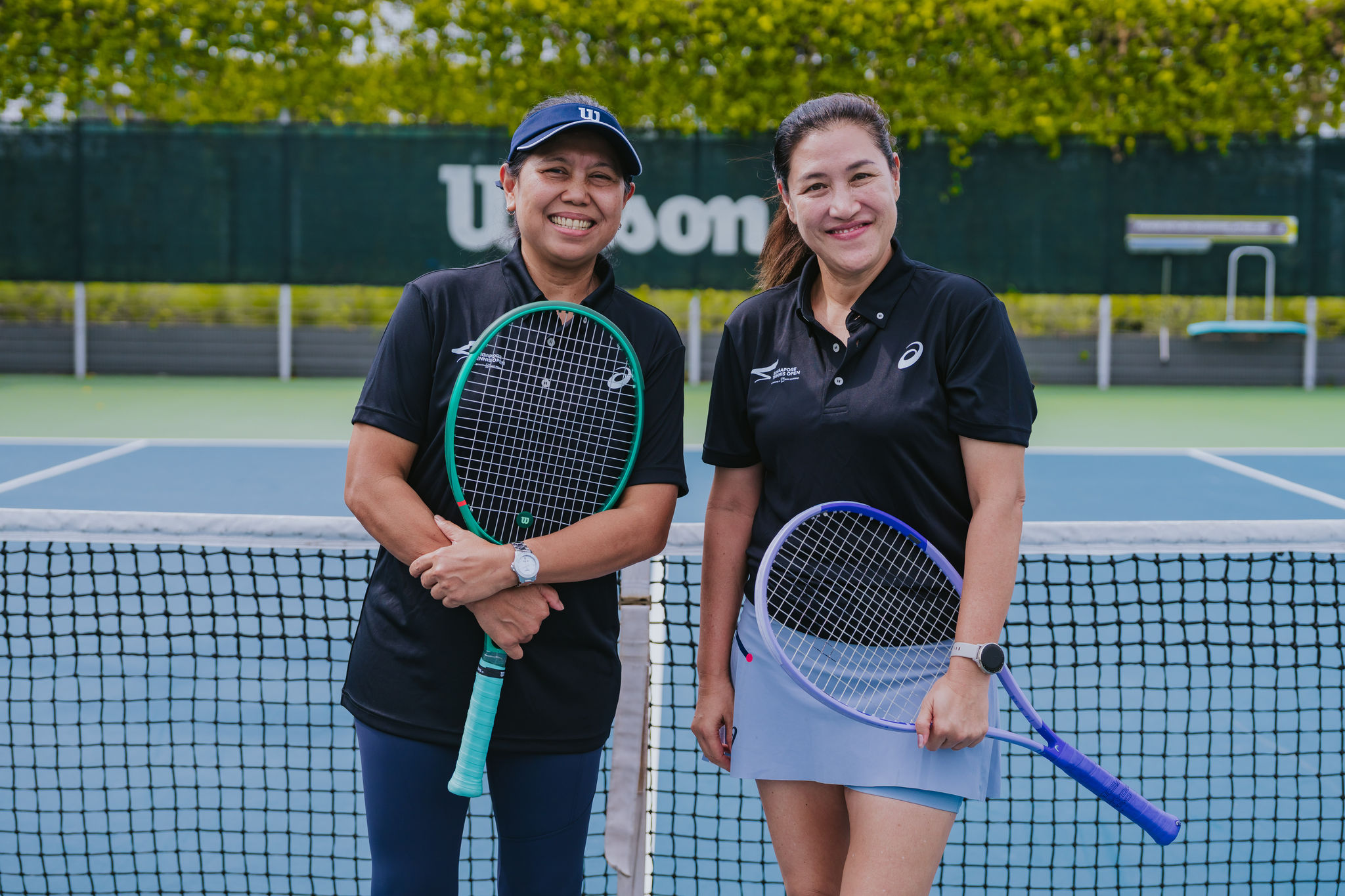 Singapore Tennis Open Ambassadors Yayuk Basuki and Tamarine Tanasugarn took to the court to guide and inspire aspiring players during the tennis clinics.
“During our time, it was just the two of us! Now we have four in the top 100,” Tanasugarn noted with a grin court-side at the precinct's training facilities while conducting tennis clinics for members of public, pointing to the meteoric rise of the Philippines’ Alexandra "Alex" Eala, Indonesia’s Janice Tjen, and Thai standouts Mananchaya Sawangkaew and Lanlana Tararudee.
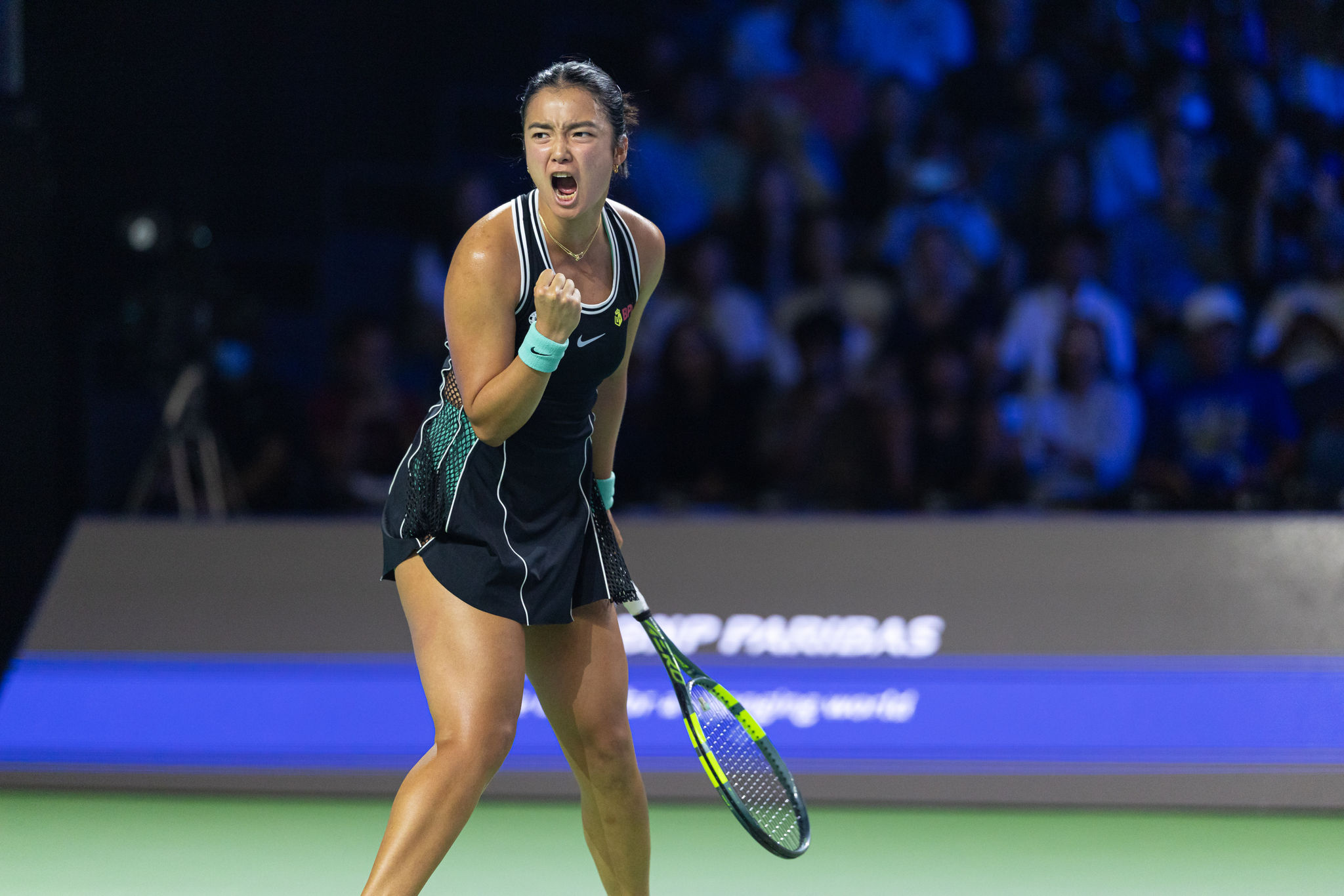 Fan favourite Alexandra Eala took to the court against Tatiana Prozorova in a highly anticipated clash.
For Basuki, having a flagship WTA 500 staged directly in Singapore provides the missing catalyst the region has needed for decades.
“I was so happy — finally Southeast Asia has a premier 500 event,” Basuki reflected. “To have a bigger event motivates our players because they compete against a better level. You see players like Andreeva and Shnaider right here. And Alex [Eala] is inspiring all the players right now. We’ve been to so many tournaments — 1000s, 500s, Grand Slams — and the organisation here is very, very good. It shows what is possible.”
Both icons spent their afternoon conducting junior tennis clinics on the courts, guiding wide-eyed local and regional youngsters through fundamentals and footwork drills.
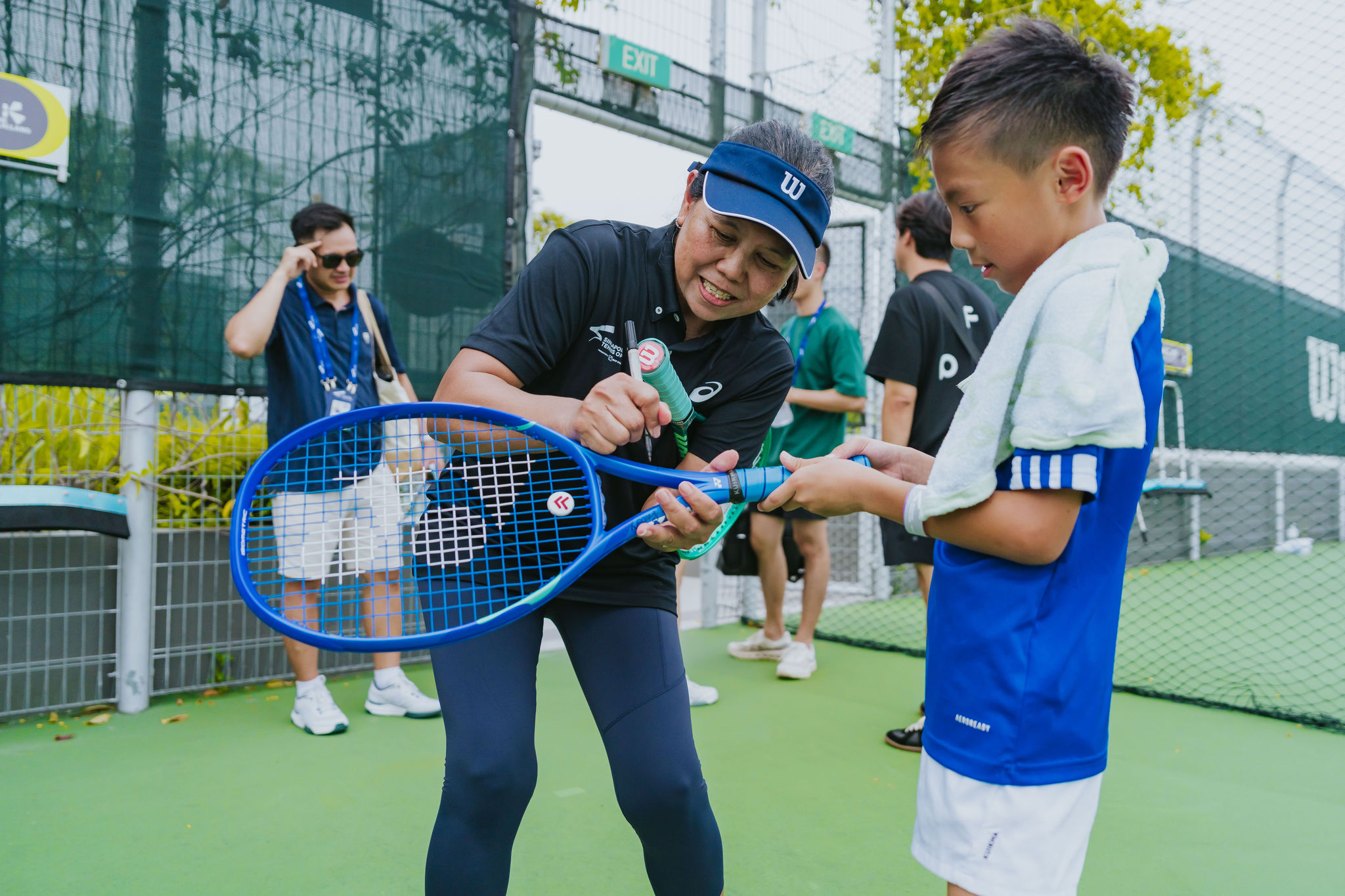 From the court to the community, Yayuk Basuki shared her passion for tennis with avid fans during her clinic at the Singapore Tennis Open.
“Tennis needs to grow in Southeast Asia,” Basuki stressed. “It’s not just about having one good player. We want the entire community to rise — kids, families, club players. Being here lets us pass on that motivation so everyone wants to be better.”
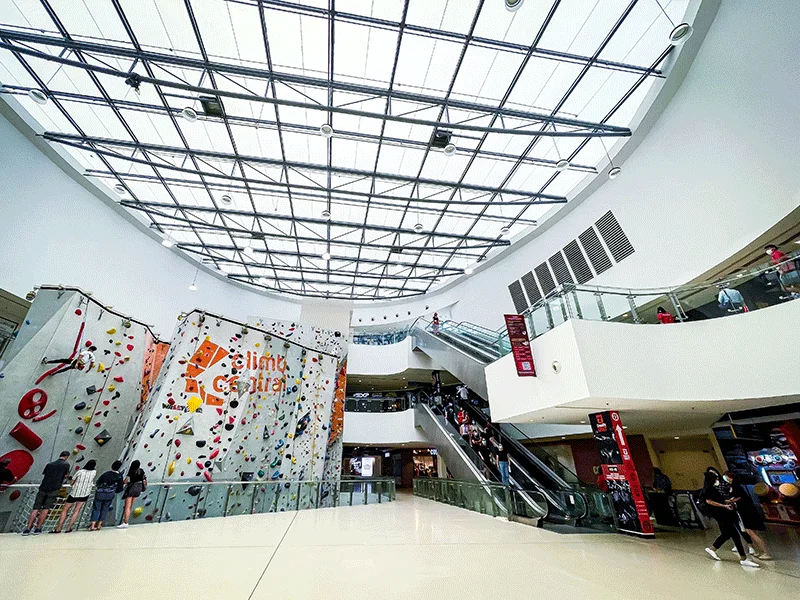
Step outside the enclosed arena into the wider Kallang precinct, and the tournament transforms into an expansive carnival of sport. Across Arena Park, Stadium MRT, and the Kallang Wave Mall atrium, the atmosphere feels closer to a festival than a closed-door elite competition.
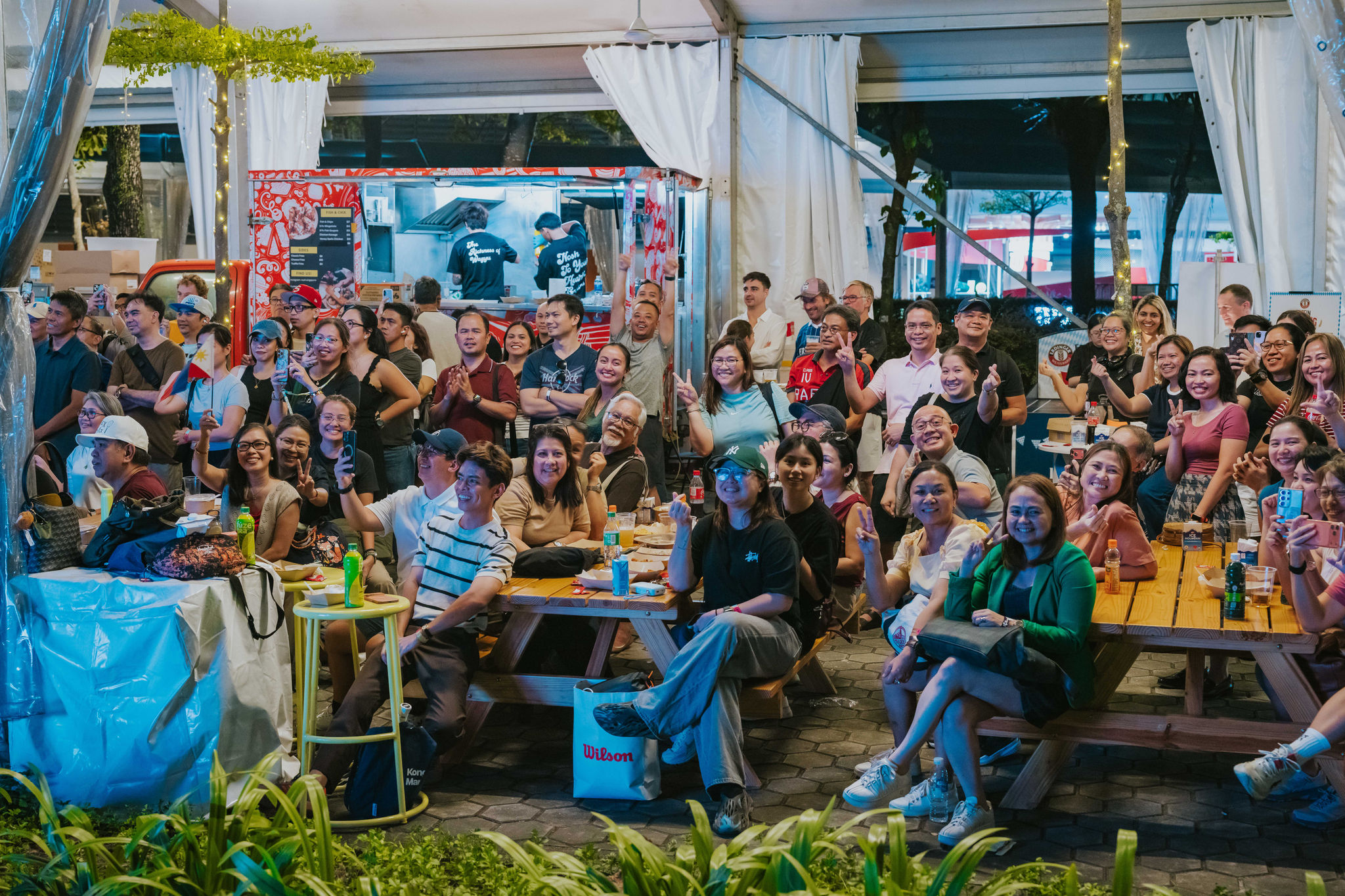 The tournament drew crowds beyond the stands, with fans without match tickets gathering to experience the buzz and cheer on the players.
Fans without match tickets lounge on seats across Break Point Garden, watching big-screen broadcasts over signature precinct refreshments like the coconut-infused Kallang Roar cocktail and local bites from food trucks. A few hundred metres away, cheers erupt inside Kallang Wave Mall, where the Giant Tennis court sees families swinging comically oversized racquets to keep giant inflatable tennis balls airborne.
Scattered throughout the festival grounds are tournament fans, overseas travellers, and everyday Singaporeans who dropped by just to soak in the buzz.
Among the travelling contingent was Dana, who flew in with her father specifically to be part of the tournament atmosphere.
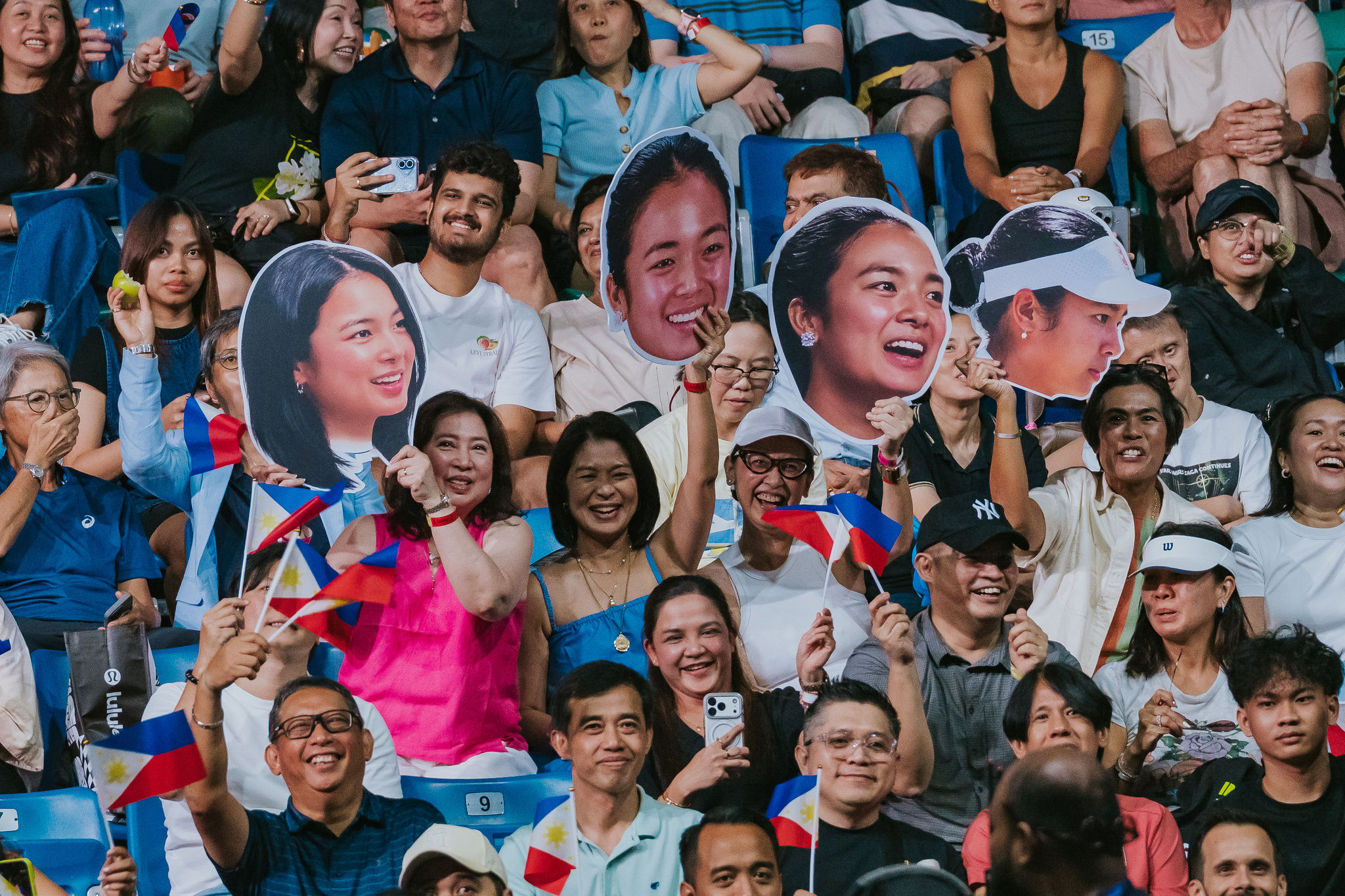 Eala-Mania swept through the stands as passionate fans packed OCBC Arena to cheer on Alexandra Eala.
“I’m from Manila, and my dad’s a huge tennis fan,” Dana shared while customising a Feel Alive tote bag at The Kallang’s Feel Alive Zone. “We actually came all the way from Manila to catch Alex Eala. We initially bought semi-final tickets to make sure we’d catch a competitive game. Between matches, the vibe out here has been fantastic — we loved getting the tote bags and customising them with patches earlier!”
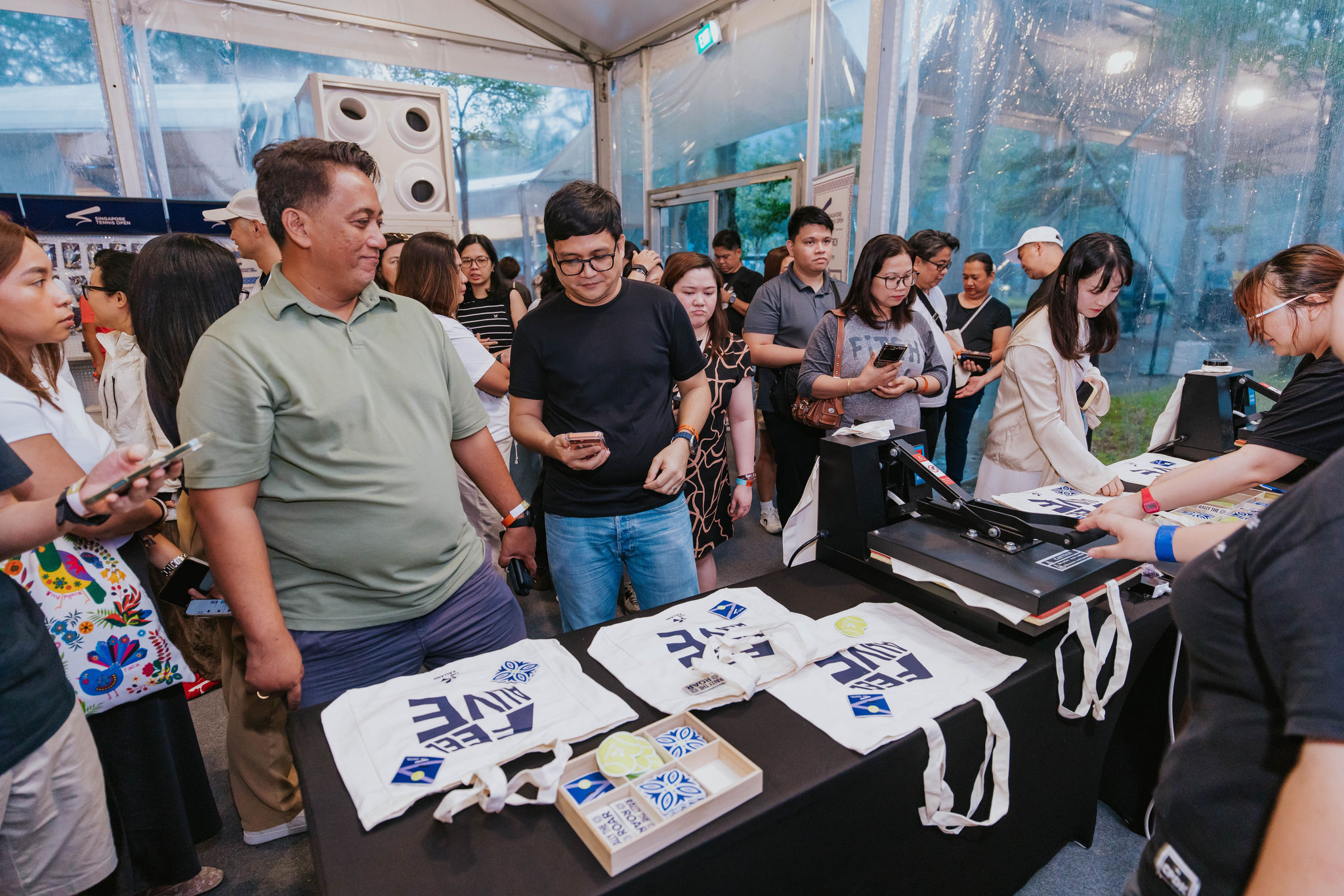 The Feel Alive Zone buzzed with activity as fans customised their own Feel Alive tote bags, complete with tennis-themed patches.
Dana believes opening the precinct up to everyone without ticket restrictions is vital for the sport's regional trajectory: “It definitely helps grow tennis. It brings more responsibility for organisers in crowd control, but seeing this level of international sport right here in Southeast Asia is huge. I only started playing tennis a year ago, but I’ve already played a couple of matches here in Singapore and I’m playing again tomorrow!”
For local university students Luke and Ting Hao, the day began with a morning tennis clinic before drifting out into the festival village.
“We came for a tennis clinic, and since we had passes, we decided to stay, walk around, check out the fan events, and catch the match later,” Luke explained. “The organisers had this mini-tennis event in Kallang Wave Mall where you hold giant-sized racquets — that was super fun. We also queued up for the tote bags and patches at the Feel Alive Zone.”
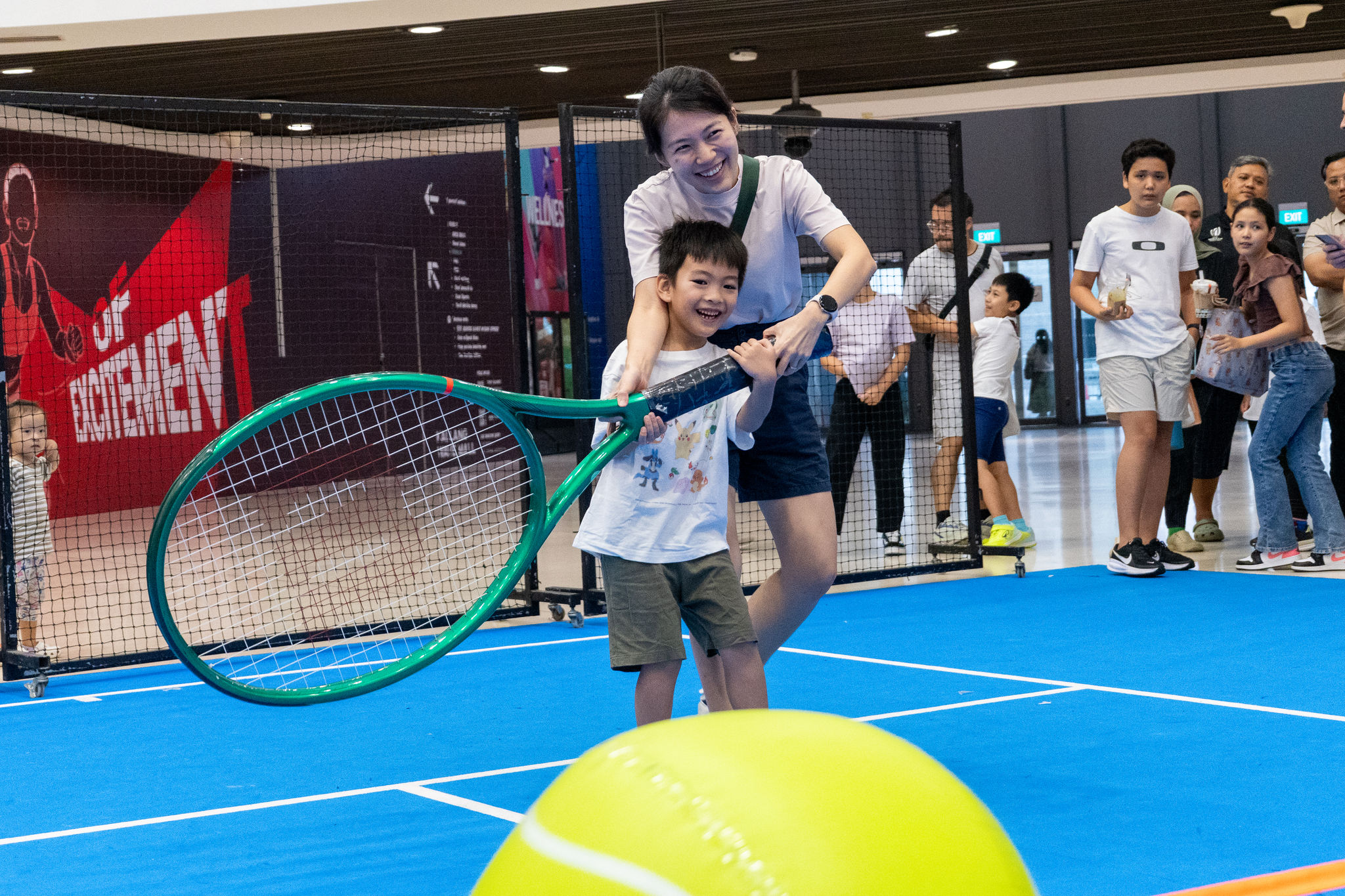 Eager fans stepped up to the Giant Tennis challenge at Kallang Wave Mall, putting their skills to the test with oversized racquets and giant inflatable balls.
Ting Hao highlighted the profound impact of having accessible, free-to-enter zones: “Tennis can sometimes feel quiet or inaccessible compared to other sports. As we walked around today, we saw so many kids and families. Having these free spaces makes the event accessible to families who might not be able to afford expensive arena tickets. At least they can still be around the event, soak in the excitement, and feel part of the community.”
For parents, the walkabout was an intentional masterclass in inspiring their children. Ting and his wife spent the afternoon navigating the concourses with their two young children in tow, racquets slung across their backpacks.
“Our kids started tennis training about a year ago, but they’ve never been to a live professional match,” Ting explained. “We came to see the speed of the ball and the players' reaction times up close. There’s a world of difference between watching tennis on a screen and seeing it live. You see how fast that ball moves, how intensely they move their feet. It’s relatable, especially when we watch the doubles.”
 From seasoned fans to the next generation of players, the Singapore Tennis Open opened its doors to everyone with a passion for the game.
His wife chimed in with a mother’s perspective: “Kids nowadays face so many digital distractions, and attention spans are shorter. It’s hard to build that true passion just from weekly lessons. We brought them here today so they could see what tennis looks like at the highest level. When they step onto the court for their next class, they’ll remember what they saw here and feel motivated.”
Their sentiments mirror the exact philosophy shared earlier by Tanasugarn.
“To build a sustainable tennis culture, you have to build genuine tennis lovers first,” Tanasugarn remarked, recalling how young fans packed the stands to chant for regional athletes. “Singapore is only a two-hour flight from Bangkok or Jakarta. To come here, meet the players, see top-10 professionals hit the ball, and participate in clinics — it makes the dream tangible for these kids.”
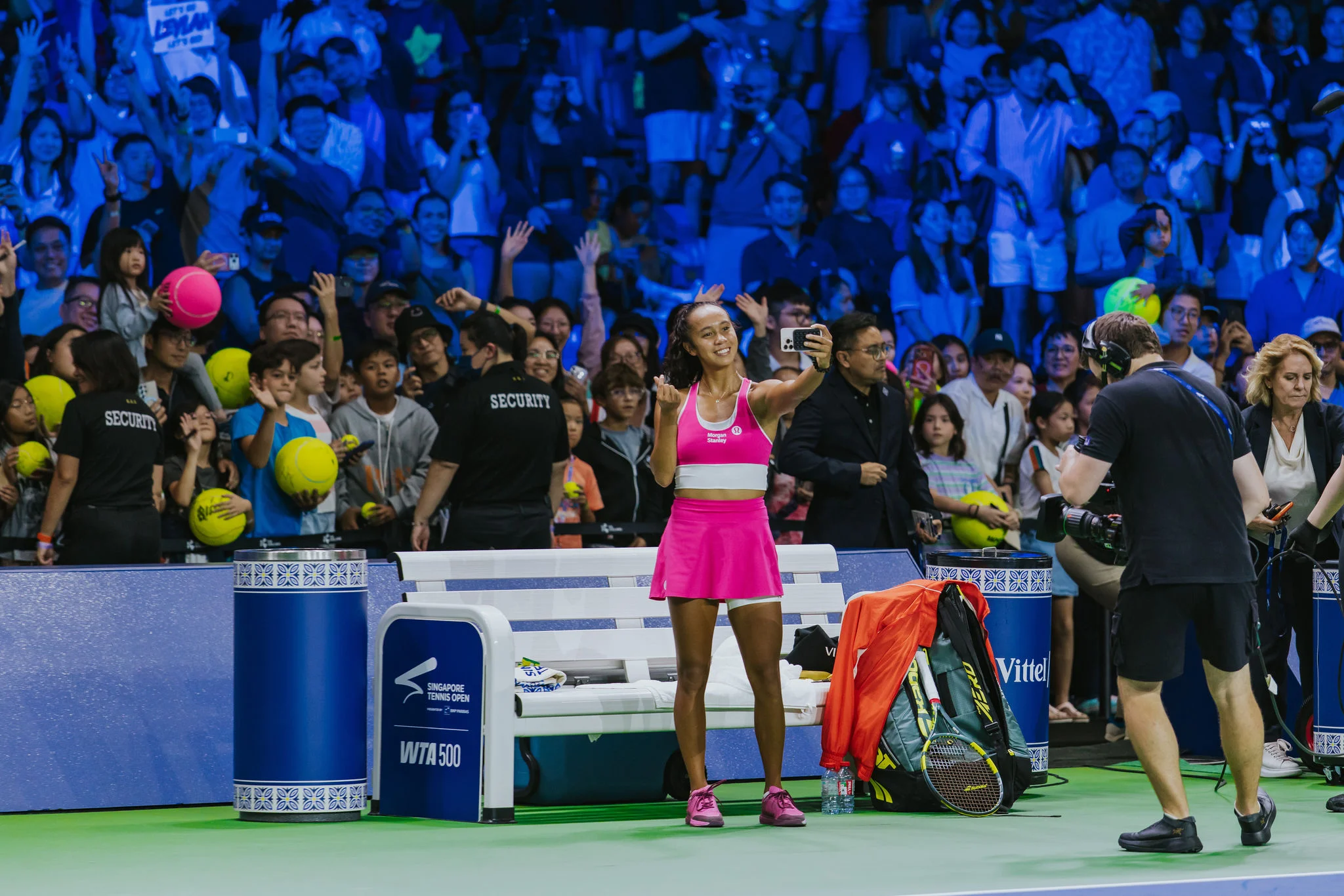
 Leylah Fernandez celebrated a triumphant finish as she was crowned champion of the Singapore Tennis Open 2026.
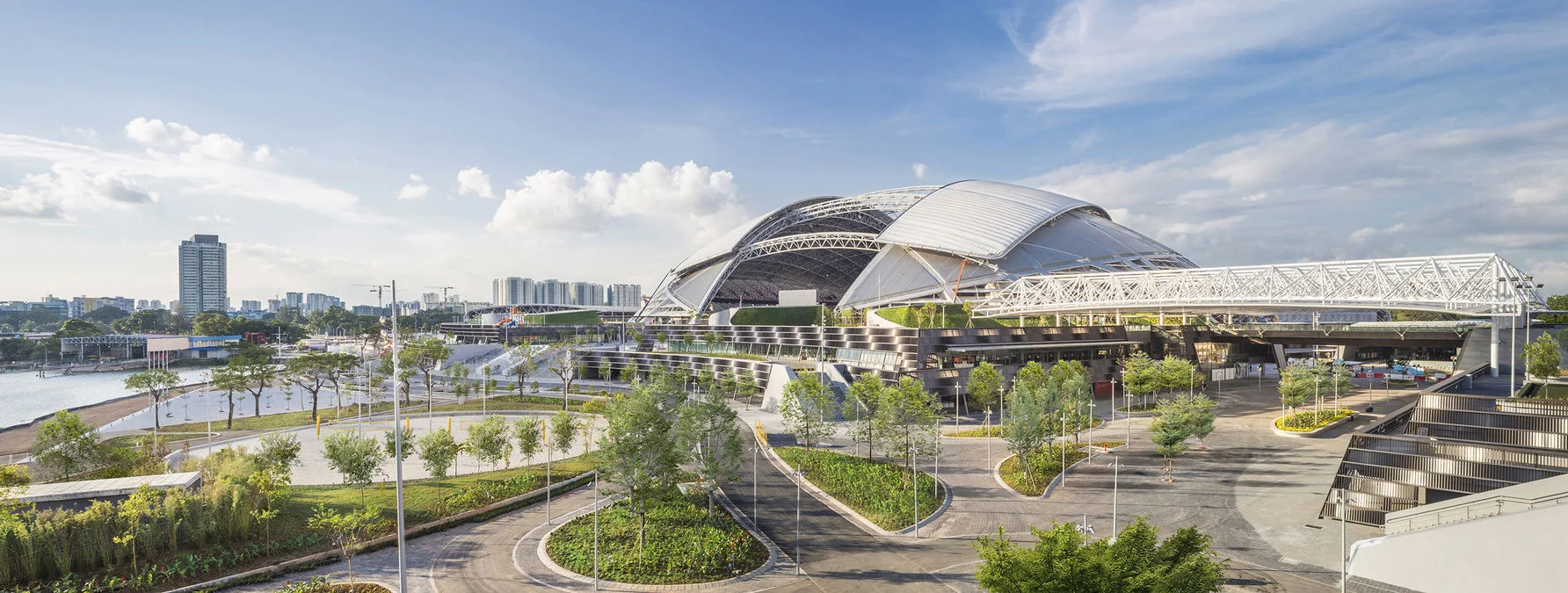
By evening, as the stadium lights illuminate the National Stadium dome and the indoor courts hum with quarter-final intensity, the broader significance of the Singapore Tennis Open becomes unmistakably clear.
A truly world-class sporting precinct cannot merely be a cluster of concrete venues reserved for ticket-holding elites. It must be an open, breathing destination that welcomes everyday citizens, invites youth to play, and bridges the gap between global sporting icons and the grassroots community.
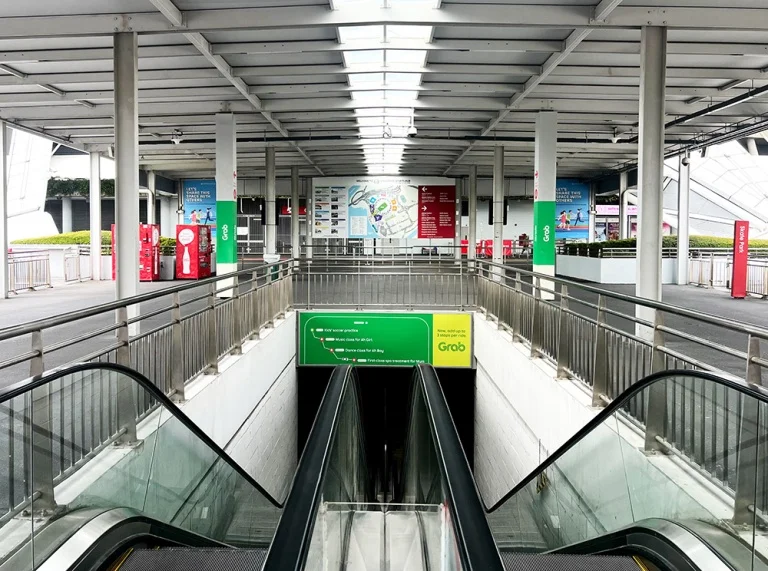
Through seamless transport connectivity, lively placemaking at Break Point Garden, experiential retail pop-ups, and elite WTA 500 competition, The Kallang has demonstrated why it belongs alongside Melbourne Park, Flushing Meadows, or Wimbledon Village as a premier sports hub.
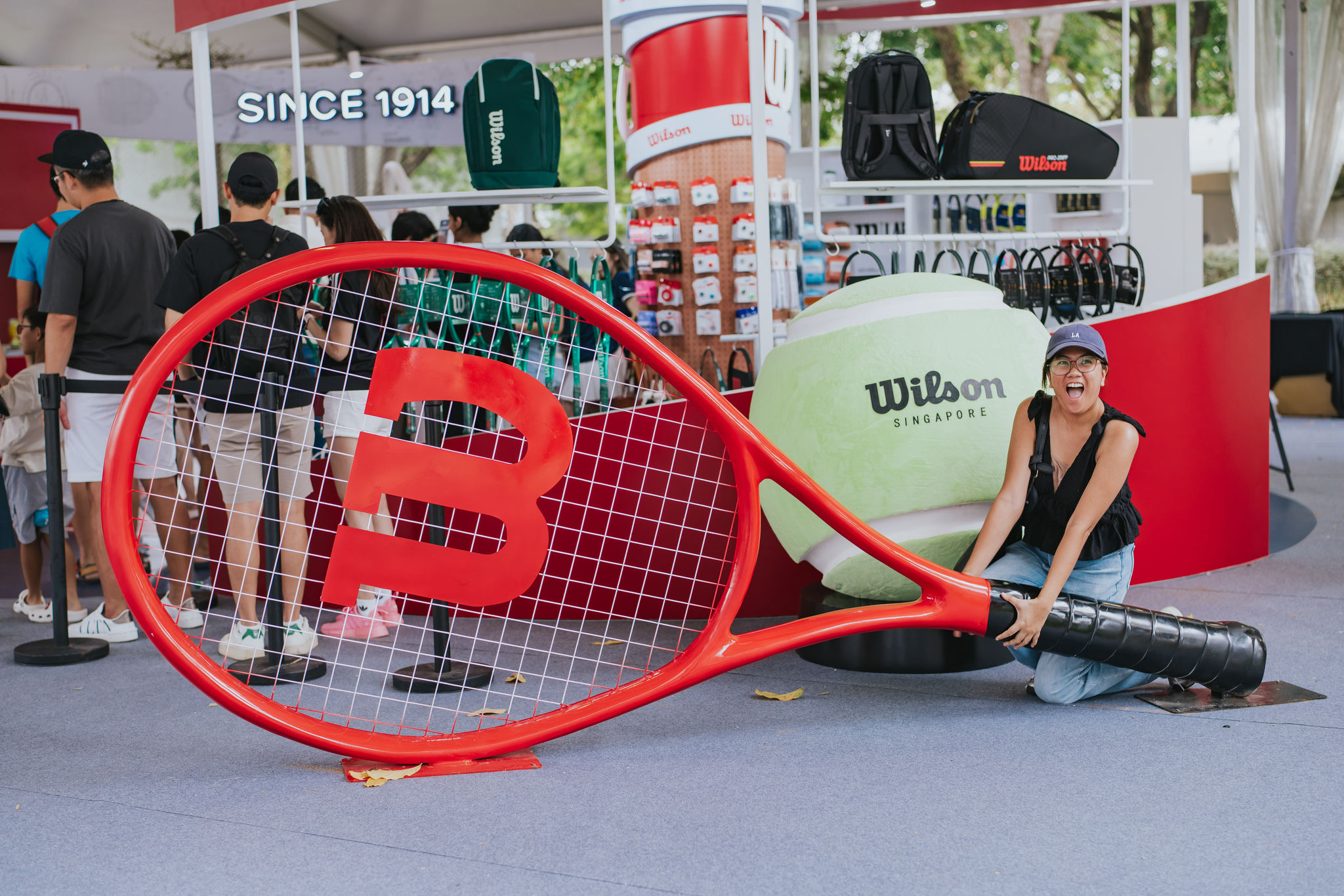 The energy extended beyond the court as Arena Park came alive with an array of booths, interactive experiences and photo spots.
The rally is far from over. The Singapore Tennis Open returns to The Kallang from 20 to 26 September 2027, bringing world-class WTA 500 tennis, fan zones, tennis clinics and festival-day energy back to the heart of Singapore.
Be the first to know when tickets go on sale, which players are confirmed, and what's new across the precinct. Register your interest and get the latest updates straight to your inbox.
See you courtside in 2027.
Stories, guides and community moments